These numbers indicate the diameter of the can end. The most common sizes are 200 (Dia. 50 mm, typically used for slim cans) and 202 (Dia. 52.5 mm, common for standard and sleek cans).
*If you enjoy a little extra trivia: The numbers (200/202/206...) follow an industry-standard coding system where the first digit represents inches, and the last two digits represent sixteenths of an inch.
Here’s how it breaks down:
200: This stands for 2 inches and 0/16ths, but in metric, it’s simplified to a nice round 50 mm.
202: This stands for 2 inches and 2/16ths, which translates to about 52.5 mm.
This coding helps keep things consistent across different regions and manufacturers.

LOE (Large Opening End), also known as LPO (Large Pour Opening) or Wide Opening (W): Designed for easy drinking and pouring, LOE provides a larger opening than standard can ends. This design optimizes the flow rate, matching the natural swallowing pace and reducing the chance of back splashing or glugging. It’s particularly beneficial for aromatic beverages, offering a smoother, more enjoyable drinking experience.
SOE (Standard Opening End): This is the traditional opening size for beverage cans. It's designed for optimal sealing and convenience, maintaining the familiar can opening experience.
FA (Full Aperture): Full Aperture ends allow the entire top of the can to be removed, turning the can into a cup-like container. This design is ideal for products where a wide opening is beneficial, like certain craft beers or ready-to-eat foods, or even the latest trend - open can cocktails that is all over the social media.
*If you see EOE, it stands for "Easy Open Ends," which means the can end doesn’t need a can opener.
Embossed or incised markings on can ends comply with local regulations or serve promotional purposes. In Canada, they typically indicate "RECYCLABLE" or "RETURN FOR REFUND". In the United States, these can be in the form of 4-state, 6-state, or 10-state markings, or other designs, depending on local laws.
SOT (Stay On Tab): This is the most common type of can end in North America, where the opening tab stays attached to the can after opening.
RPT (Ring Pull Tab): This design features a ring that is pulled to open the can. It's more common in certain countries in Asia and Europe.

B64: This is a traditional can end type, known for its compatibility with various filling and sealing machinery. It's widely used due to its reliability and standard design.
CDL: A more modern and lightweight can end. It features a smaller diameter for material efficiency and is compatible with specific canning lines. CDL is distinguished by its advanced sealing capabilities, making it suitable for beverages requiring extended shelf life.
>> Read more about B64 vs CDL - Can End Deep Dive
The internal coating protects against corrosion and product interaction. Common types include:
Epoxy Coatings: These are traditional coatings known for their excellent adhesion and durability. They provide strong resistance to corrosion and are widely used in food and beverage cans.
BPA-NI (BPA Non-Intent) Coatings: BPA-free alternatives, offering similar protection while addressing health concerns.
Both epoxy and BPA-NI coatings play a crucial role in maintaining the quality and safety of canned products, but the choice between them can depend on regulatory requirements, consumer preferences, and specific product needs.
>> Read more about Epoxy vs BPANI

The 202-B64 (Epoxy) is our most popular can end format, compatible with both Standard and Sleek aluminum cans. We maintain consistent local stock across our Canadian warehouses in British Columbia, Alberta, and Ontario, with our Nova Scotia location opening in March-April 2026 to serve Atlantic Canada.
While we specialize in Silver Epoxy, we frequently stock specialty options like BPANI liners and other colours such as full gold or black lids. Please inquire to confirm current inventory levels and pricing.

Colour: Silver/Silver
These type of full open can lids (specifically for aluminum beverage cans) showed up around 10 years ago, we sold them from time to time, mostly for cooking sauce and curry, but it stayed pretty niche. And it probably still is, that said, we’re seeing more of it now. The newer versions are better designed for beverages, smoother edges, wider pull tabs, and grooves that help creating a smoother pour and a finer foam. They’re safer to drink from directly, and the risk of cutting your hand on the tab (which definitely used to happen) is a lot lower.

Side-by-side comparison of our full aperture can ends. The newer version (right) features a wider pull tab for easier opening and a smooth edge around the opening.

Side-by-side comparison of our full aperture can ends. The newer version (right) includes a special groove design for a smoother pour and finer foam.

Example: The newer version of the full aperture can end being used to replicate a “draft beer” experience at home.

The latest batch of full aperture ends we’re bringing in has a few subtle refinements to the design:
Improvements
• The scoring at the end of the opening path is now refined for an even smoother rim.
• A new tab pocket keeps the tab from swinging around on the canning line.
• The ends now use a slightly updated aluminum alloy that performs better for enamel ratings.
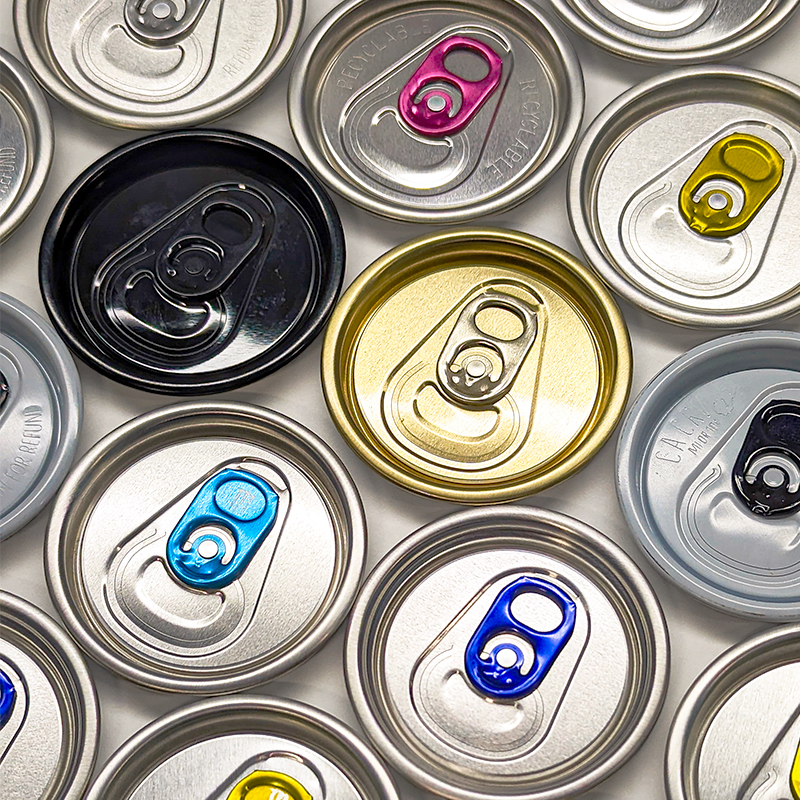
Coloured can end is a simple way to differentiate your brand on the shelf without changing your entire label. Beyond aesthetics, we offer functional customizations including QR code printing for digital campaigns and incised can ends (Return for Refund, Recyclable, 10-State CTRV, etc.) to ensure full regulatory compliance across your distribution territories.
All of our can ends are compatible with both cold-filled products and pasteurization.
Note
Custom coloured can ends typically require a full 20’ container to produce, since one coil makes about that much. But we occasionally bring in special colours by the pallet when there’s enough demand, and you may find extra stock available from previous custom runs.
Beyond our local 202-B64 stock, we facilitate direct sourcing for specialized formats. Due to manufacturing and shipping logistics, these items are available for high-volume orders only (minimum: 1 Full Container Load).

The Stay-On-Tab (SOT) with a Small Opening End (SOE) is most common for the 200-diameter (Slim Can) size. Because the smaller aperture restricts flow, it is more popular among smaller-portion, high-intensity drinks like cold brew coffee, energy shots, or high-ABV canned cocktails.

CDL is a lightweight alternative to the B64 profile. It is often the preferred choice for high-volume producers looking to reduce material costs. Note that multiple CDL types exist (e.g., CDL-E, CDL+, CDL-W); if you are switching suppliers, we recommend extra seamer testing to ensure a proper seal.
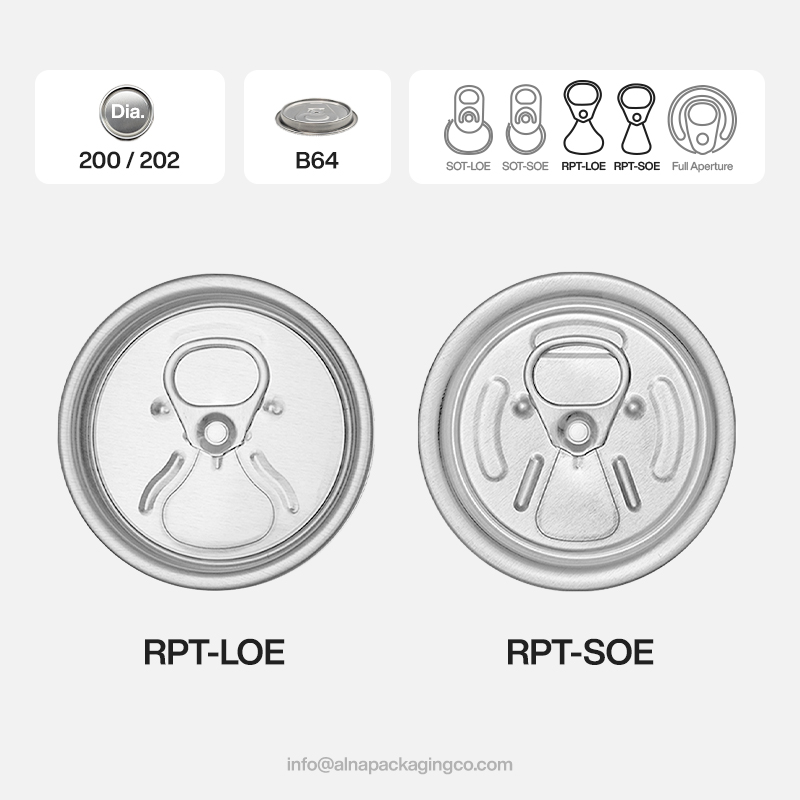
Ring-Pull Tab (RPT) ends feature the classic ring that detaches completely from the can. While less common in North American beverage markets today, they remain a popular requirement for specific international exports to Europe and Asia.
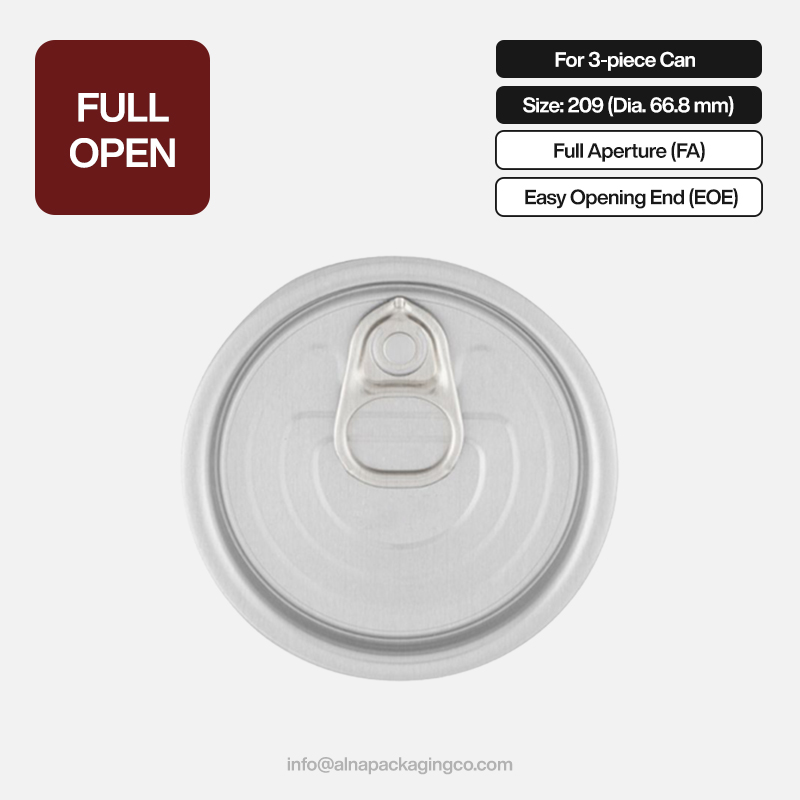
Our 3-piece ends are primarily sourced for traditional food packaging (canned vegetables, soups, and sauces). We facilitate sourcing for a wide range of industry-standard diameters, including 202, 206, 209, 211, 300, 307, 401, and 502.